Remove manual prep
Reduce the work of gathering inputs, cleaning up context, and rebuilding reports before every review.

PropelYourMSP alternative
Stop building strategy around questionnaires, spreadsheets, and manual prep.
PropelYourMSP helps vCIOs prepare reviews, but the workflow can still depend on manual inputs, technical reports, and limited integrations. Lifecycle Manager gives MSPs a cleaner way to run Customer Success conversations clients can understand.
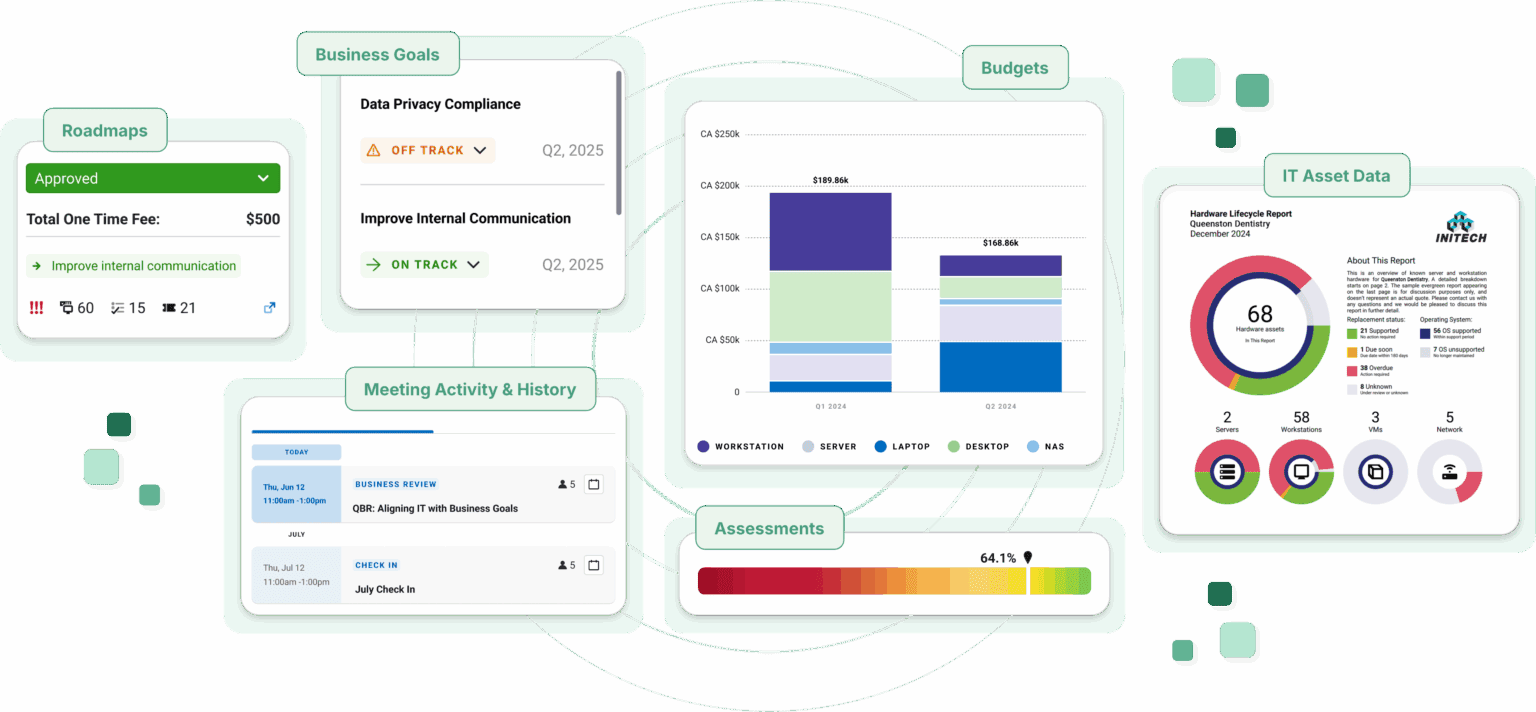
Strategic client work gets harder when the tool adds admin before the conversation starts. Lifecycle Manager reduces prep, standardizes output, and helps teams turn client context into repeatable Customer Success workflows.
Questionnaires and technician-entered audit data
Heavy manual inputs can slow the team down before the strategic conversation even begins.
Automated Customer Success context
Lifecycle Manager helps teams bring goals, meetings, assessments, budgets, Roadmaps, initiatives, and recommendations into a cleaner planning motion.
Technical reports that need extra interpretation
Reports can require editing or translation before non-technical stakeholders understand what matters.
Client-ready reports and meeting prep
Lifecycle Manager makes it easier to communicate recommendations, priorities, and next steps in a format clients can act on.
Narrower integration coverage
Limited integration depth means more cleanup work and less complete context for technicians and account managers.
Broader MSP workflow fit
Lifecycle Manager fits the MSP stack and helps teams standardize client conversations without stitching data together by hand.
SaaS and AI usage can stay out of view
Review-prep tools do not necessarily expose shadow IT, shadow AI, or SaaS utilization across the client environment.
Shadow IT, shadow AI, and utilization insight
Lifecycle Manager brings SaaS visibility into the Customer Success motion so app risk, spend, and adoption shape the client plan.
Focused on review prep
A QBR-focused workflow can miss the ongoing communication MSPs need between formal business reviews.
Strategic conversations beyond the QBR
Lifecycle Manager supports scheduled reporting, meeting context, Roadmaps, budgets, and initiatives so the strategy stays visible all year.
Lifecycle Manager advantage
Lifecycle Manager helps MSPs remove friction from client-facing work so account managers, vCIOs, and executives can focus on outcomes instead of document assembly.
Reduce the work of gathering inputs, cleaning up context, and rebuilding reports before every review.
Turn assessments, goals, budgets, Roadmaps, initiatives, and SaaS insights into conversations clients can follow.
Give the whole team a repeatable workflow instead of depending on one person to prepare every strategic review.
Customer Success workflow
Lifecycle Manager helps MSPs move from assessment findings and goals to meetings, budgets, Roadmaps, initiatives, and SaaS management conversations that drive client outcomes.
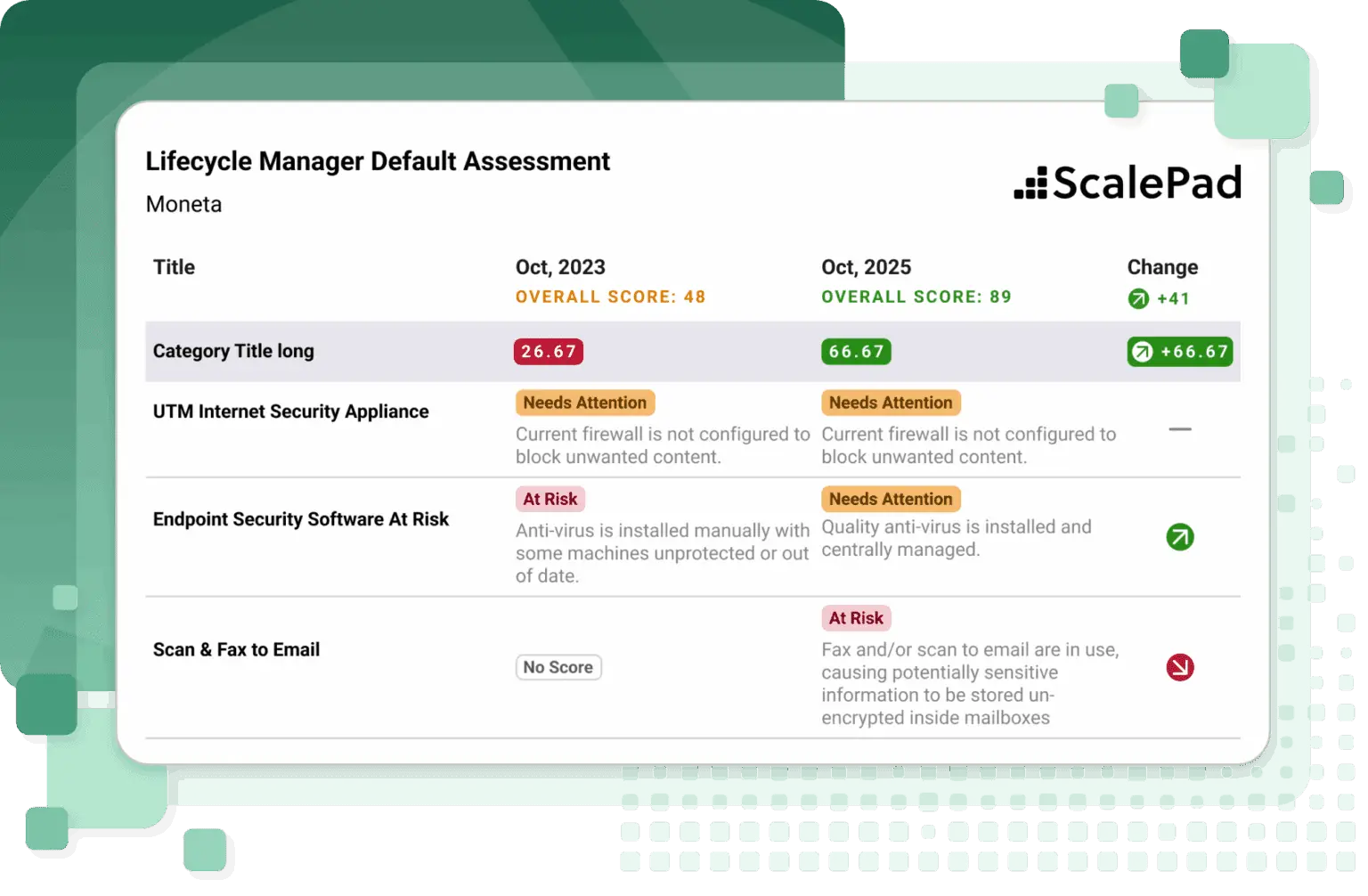
Keep every client conversation anchored to priorities, outcomes, and follow-through.
Connect strategy to timing and investment so clients know what to approve and why.
Surface shadow IT, shadow AI, and SaaS utilization so app risk and spend become part of the plan.
Platform advantage
Lifecycle Manager is part of the ScalePad Platform, so MSPs can use APIs, MCP, and recipes to turn Customer Success context into workflows, automations, and AI-assisted work.
Connect Lifecycle Manager context to reporting, automation, and the systems your MSP already runs.
Chat with the ScalePad Platform and use approved data to answer questions, pull context, and trigger the next step.
Use recipes to operationalize repeatable Customer Success motions across ScalePad products and connected tools.
Lifecycle Manager easily integrates and syncs with all of the tools in our stack, allowing our team to focus on our clients instead of combing through duplicated data. The reports are fantastic and make communicating hard data super easy.
Stacy Kulhanek
Operations Manager, NetSource One
Next step
Get a personalized look at how Lifecycle Manager helps MSPs reduce manual review prep, standardize client conversations, and turn Customer Success into a repeatable workflow.
FAQ