Task Description:
Enable Multi-Factor Authentication (MFA)

Phase 3
Turn goals into roadmaps, budgets, and initiatives clients can approve.
Roadmaps and budgets lose impact when they are full of technical language. Connecting them to business goals helps clients understand why the work matters.
Roadmaps help MSPs organize projects into step-by-step plans. They help keep internal teams on track and clients aware of what's happening and when. A good Roadmap connects each project to a customer's bigger goals.
It also acts as a guide in meetings, especially Quarterly Business Reviews, to show progress.
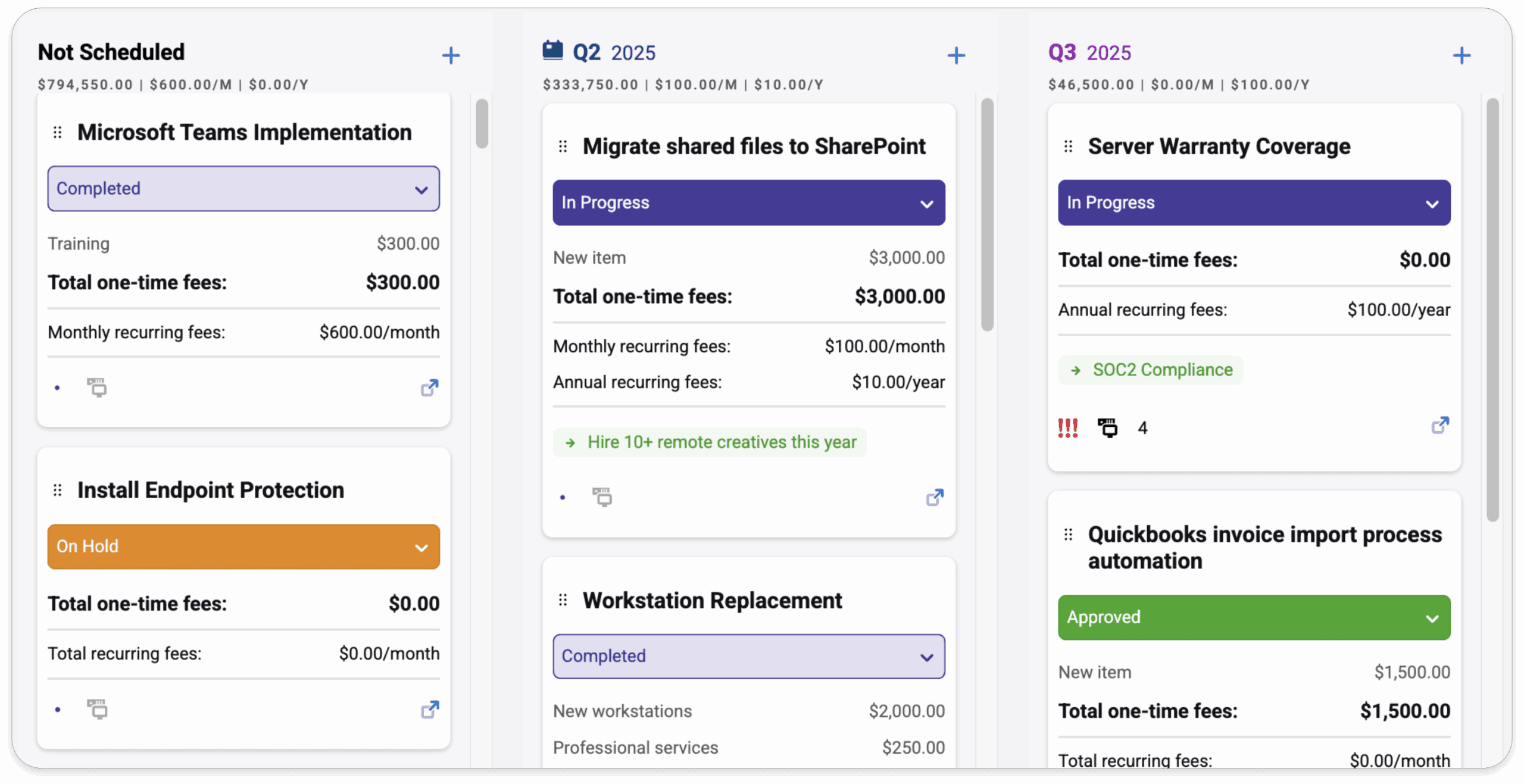
To create a strong Roadmap, take the goals uncovered during Discovery and turn them into clear initiatives.
Initiatives are projects or tasks you believe will help a client reach their goals. They are the building blocks of your Roadmap. A good Initiative should explain:
Keep Initiatives to 1-2 clear sentences that a non-technical stakeholder could understand. They should highlight the value of the work, not just describe the task.
Task Description:
Enable Multi-Factor Authentication (MFA)
Showcases Value:
Roll out MFA across all user accounts to protect sensitive data and support the company's cyber insurance compliance.
Example #1
Example #2
If you do not connect costs to your client's goals, they will just see your proposal as another surprise expense. But when you tie spending to what matters to them, it shows you are thinking strategically.
Timing matters. Sharing a budget alongside your Roadmap shows you are planning ahead, not just asking for money, and helps avoid sticker shock.
The best time to present a budget is early on, like at the start of the fiscal year or early in your partnership. This sets clear expectations and helps your customer plan for the year.
Do not worry if your first budget is an estimate. Giving your clients a price range early on is better than surprising them with the full cost later.
Here are some other points in the client journey where it makes sense to review budgets:
Most budgets fall flat because they feel like an expense list with no context. Instead, tie each item to a business goal and show when it will happen, according to your Roadmap.
Segment C - High Maturity, Low Appetite
Roadmaps should be year-long documents tied to productivity, automation, and collaboration strategies. Initiatives should support cross-departmental productivity and process change or CapEx projects. Proposals and budgets should center on ROI and mid-term outcomes.
Segment A - High Maturity, High Appetite
Roadmaps should be multi-year documents tied to OKRs across multiple departments. Initiatives should focus on innovation, strategic platforms, and other CapEx projects. Proposals and budgets should be polished presentations that require formal approval.
Segment D - Low Maturity, Low Appetite
Roadmaps should focus on short-term priorities and improving the baseline tech stack. Initiatives should center on executional projects, lifecycle upgrades, or compliance actions. Proposals and budgets should be streamlined and simple.
Segment B - Low Maturity, High Appetite
Roadmaps should be short-to-midterm documents highlighting key foundational projects that support business operations. Initiatives should focus on stack modernization, recurring services, tactical upgrades, and clear timelines.
Lifecycle Manager
The right Customer Success tools turn client touchpoints into value-driving conversations at scale.