Maritime cybersecurity compliance can be hard to manage when requirements live across spreadsheets, folders, emails, and one-off client notes.
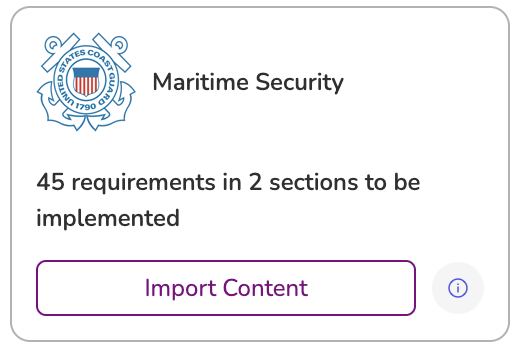
ControlMap now supports Maritime Security 33 CFR Part 101 as a native framework, giving MSPs a structured way to assess requirements, assign work, track progress, and manage evidence for clients with applicable maritime security obligations.
The framework is available in ControlMap now.
What is Maritime Security 33 CFR Part 101?
Maritime Security 33 CFR Part 101 covers general maritime security requirements under 33 CFR Subchapter H. The cybersecurity requirements in Part 101 Subpart F set minimum cybersecurity requirements for applicable U.S.-flagged vessels, facilities, and Outer Continental Shelf facilities.
The cybersecurity requirements cover areas such as Cybersecurity Officer responsibilities, Cybersecurity Plans, drills and exercises, records and documentation, cybersecurity measures, compliance dates, and compliance documentation.
Separate but related Coast Guard cybersecurity updates have also increased attention on maritime security programs.
For example, the U.S. Coast Guard finalized cybersecurity requirements for the Marine Transportation System, with the final rule effective July 16, 2025.
That broader regulatory movement is one reason maritime organizations are paying closer attention to how security work is documented, assigned, and maintained.
For MSPs, the important part is simple: some maritime clients now have more cybersecurity and compliance work to organize, prove, and maintain over time.
What’s new in ControlMap?
The Maritime Security 33 CFR Part 101 framework is now available in ControlMap as a native framework.
That means partners can use ControlMap to:
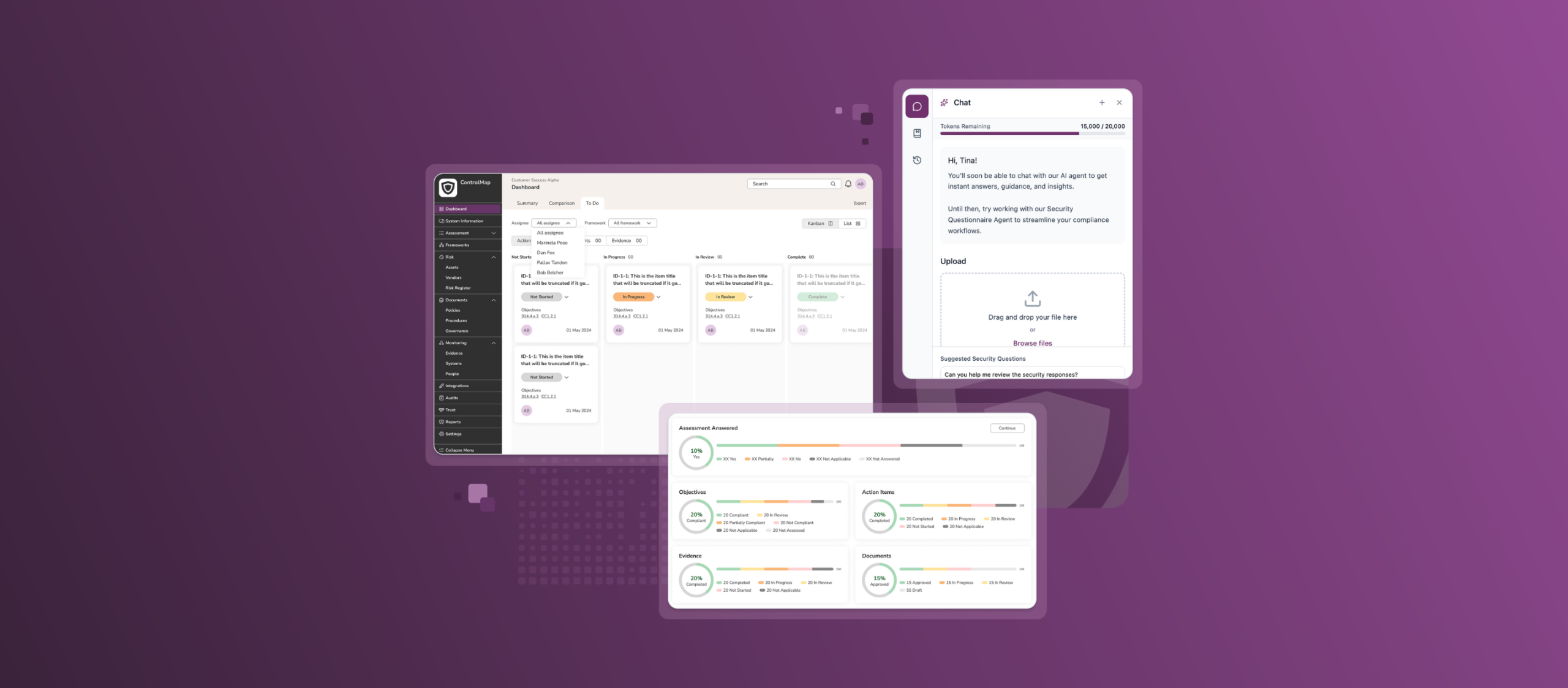
- Assess applicable maritime security requirements
- Track compliance progress by client
- Assign work to the right owners
- Manage evidence in one place
- Link evidence to compliance objectives
- Prepare for client reviews, internal check-ins, and audit-related evidence discussions
This gives MSPs a cleaner starting point than recreating maritime security requirements through custom controls.
Why native framework support matters
Some frameworks are too operational to manage as a one-time checklist.
Maritime security work can involve plans, assessments, drills, exercises, documentation, evidence, and regular review. That kind of work gets messy fast when it lives across spreadsheets, folders, inboxes, and meeting notes.
Custom controls can work for one-off tracking, but they put more setup, maintenance, and reporting burden on the MSP. Native framework support gives teams a defined starting point they can use more consistently across applicable clients.
With the Maritime Security 33 CFR Part 101 framework in ControlMap, MSPs can manage maritime compliance activity alongside the other frameworks, evidence, tasks, and reports they already use to support clients.
Who should use this framework?
This framework is most relevant for MSPs supporting clients with applicable maritime security obligations, including certain U.S.-flagged vessels, facilities, and Outer Continental Shelf facilities with applicable Coast Guard cybersecurity obligations.
It should not be treated as a blanket requirement for every shipping, logistics, or transportation client.
If a client is simply in logistics, warehousing, freight, or transportation, that does not automatically mean this framework applies. The right fit depends on the client’s regulatory obligations, operating environment, and whether they fall under the relevant maritime security requirements.
How MSPs can use it
For MSPs building or expanding compliance services, this update helps turn maritime security work into a more repeatable service motion.
You can use the new framework to:
- Start a structured assessment for an applicable maritime client
- Identify gaps by requirement
- Assign remediation work internally or to the client
- Track evidence as work gets completed
- Review progress before client meetings
- Support audit preparation with organized documentation
Instead of building a one-off process for each maritime client, your team can work from a consistent framework inside ControlMap.
Why this matters
MSPs are often expected to help clients make sense of requirements that were not written with small or mid-sized teams in mind.
That creates a practical delivery problem: your team has to translate regulatory requirements into tasks, evidence, owners, and status updates.
ControlMap helps bring that work into one place.
For maritime clients with applicable obligations, the new framework gives MSPs a way to move from “we need to figure this out” to “here’s what applies, here’s what’s done, here’s what’s missing, and here’s what needs attention next.”
For MSPs building compliance services, the value is repeatability: the more structured the delivery motion, the easier it is to support specialized client requirements without rebuilding the process every time.
Available now
The Maritime Security 33 CFR Part 101 framework is available in ControlMap now.
Existing ControlMap partners can access the framework in ControlMap and begin using it with clients that have applicable maritime security requirements.
Not using ControlMap yet? Book a demo to see how MSPs can manage client compliance across frameworks, evidence, tasks, and reporting from one place.
Existing partners can also talk to your account manager for help getting started.
Regulatory references